
Rackhouse Founder Spotlight: Ben Colman, Co-Founder and CEO of Reality Defender
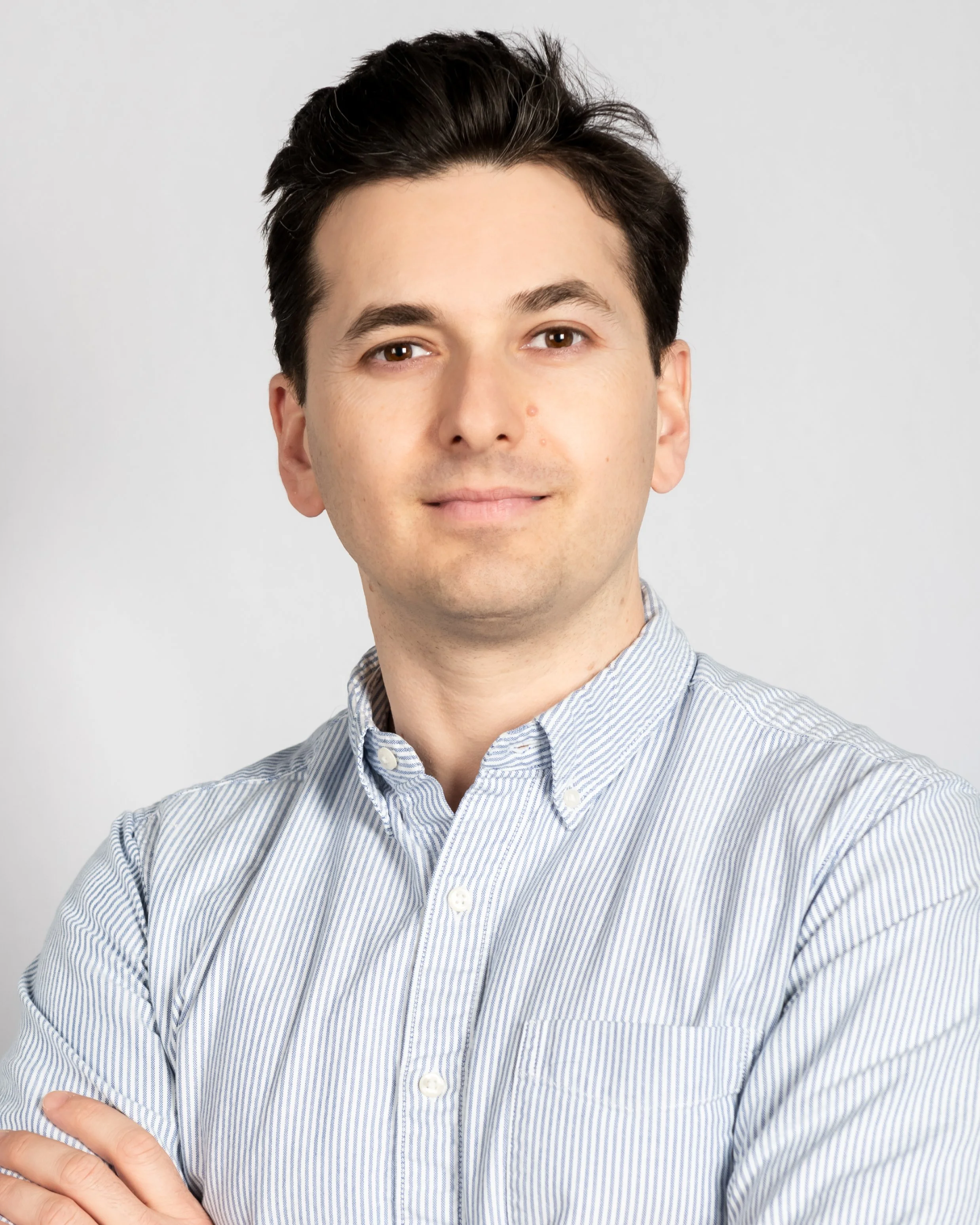
Building the Trust Infrastructure for an Age of AI-Generated Deception
The Attack Surface Moved
The trust signals enterprises have relied on for decades are now forgeable. Not theoretically. Operationally.
A voice on a phone call. A face on a video conference. A person showing up to a job interview. These have long served as the final verification layer in moments that carry real consequences: wire authorizations, account resets, credential handoffs, hiring decisions. They worked because impersonating them required resources most attackers didn't have. That's no longer true.
A finance employee at a multinational engineering firm authorized $25 million in transfers after a video call with a deepfaked CFO. A senior US government official's voice was cloned and used to contact other officials. North Korean IT workers, using AI-generated identities and deepfaked video, infiltrated hundreds of Fortune 500 companies, funneling an estimated $1 billion to Kim Jong Un's nuclear program.
Seeing the Curve Early
Reality Defender exists because Ben Colman kept seeing a vulnerability that nobody else thought was urgent yet.
During his time at Goldman Sachs, his team was stress-testing voice authentication vendors being evaluated for consumer banking products. The systems were sophisticated by the standards of the time. But occasionally, they would authenticate a computer-generated voice as real. Nobody treated it as urgent. The tools to exploit that vulnerability didn't exist yet at any meaningful scale.
By 2021, that vulnerability had a name, a rapidly expanding toolkit, and a growing body count. Voice cloning was cheap. Video manipulation was accessible. The institutions most exposed had no systematic way to defend the channels they relied on most. Colman started Reality Defender as a nonprofit research initiative to build what didn't exist. The commercial case caught up quickly.
When Judgment Became the Attack Surface
Existing security infrastructure protects networks, endpoints, and credentials. It doesn't protect the moments that matter most: a bank agent taking a call from someone claiming to be a customer, an HR team conducting a video interview before issuing corporate access, a finance executive approving a wire transfer based on what they see on screen. Those moments run on authenticity. And authenticity can now be manufactured.
The scale of exposure is becoming measurable. The FTC reported over $1.1 billion in losses tied to business and government impersonation scams in 2023 alone. That figure captures only what was reported. The actual cost, in fraudulent transfers, compromised systems, and eroded institutional trust, is almost certainly larger, and it's growing faster than the defenses designed to stop it.
Detection can't live in a separate portal that someone remembers to use. It must run where decisions happen. Anything slower than real time isn't a defense.
Detection Where It Counts
Reality Defender was built around a single architectural conviction: detection has to live where trust is granted, not somewhere downstream from it.
The platform runs an ensemble of specialized models trained separately for audio, video, and image detection, then cross-validated to produce a single probability score with explainable outputs. The approach matters because no single model can keep pace with the full range of generation techniques in circulation. Rather than a binary yes or no, analysts get a probability score alongside visual indicators of where and how manipulation was detected. Those outputs are usable in compliance workflows, incident investigations, and evidentiary reviews.
That detection runs across four purpose-built surfaces:
RealCall – real-time voice deepfake detection embedded in contact center and telephony workflows
RealMeeting – video meeting participant authentication inside Zoom and Microsoft Teams, flagging synthetic media during live calls
RealAPI – a developer API that embeds deepfake detection across any stack, workflow, or use case in two lines of code
RealScan – media upload analysis for image, video, and audio, delivered as a web app for analyst and investigative review
Each deploys as hosted SaaS, on-premises, private cloud, or air-gapped for government and law enforcement environments. No metadata required. No workflow redesign.
Trusted by the Institutions That Can't Afford to Be Wrong
Reality Defender launched into some of the most demanding environments available and stayed there.
In financial services, the company was inducted into JPMorganChase's 2025 Hall of Innovation, recognizing privately held technology partners making a measurable impact on the firm's operations. A JPMorganChase CIO was quoted in the public announcement describing Reality Defender working directly with the firm to integrate detection into communications workflows.
In government and defense, Reality Defender joined NATO's Strategic Communications Centre of Excellence for cognitive warfare experimentation in February 2026. Being brought into that environment says everything about how seriously defense institutions are treating this threat.
In enterprise operations, Reality Defender partnered with TaskUs in November 2024 to embed detection directly into contact center and content moderation workflows.
The security community has independently validated what those institutions already decided. Reality Defender won the RSAC Innovation Sandbox in 2024, was named a SINET16 Innovator, and in December 2025 Gartner identified it as the deepfake detection company to beat.
Infrastructure, Not Just a Product
Rackhouse's conviction when investing in Reality Defender started with a simple observation: the rise of generative AI would make it increasingly difficult to trust content delivered through any digital or electronic channel. Not just video. Not just audio. Any channel where identity or authenticity is asserted without a physical presence.
That framing shaped what kind of solution Rackhouse was looking for. The plurality of surfaces, the rapid pace of model innovation, and the growing sophistication of bad actors made clear that a single product or authentication flow wasn't going to be enough. This was a problem with the infrastructure of the internet. The solution needed to be infrastructural. What deepened that conviction was the team's approach to research: by building close partnerships with the labs creating the generative models, they weren't solving the detection problem alone.
That thesis has been validated by the product's evolution. Reality Defender's shift to an API-first form factor means any application, for any media type, can have deepfake detection embedded in two lines of code. What started as a metaphorical infrastructure play has become a literal one.
The Next Test
The platform covers every major channel where synthetic media executes fraud. The next test is becoming embedded infrastructure inside enterprise security stacks, the way endpoint protection and email filtering did before anyone debated whether they were necessary.
That transition is being accelerated from outside. The EU AI Act introduced mandatory disclosure requirements for synthetic content. US legislators are advancing impersonation-focused bills. For enterprise security buyers, deepfake detection is shifting from a discretionary line item to a compliance requirement.
Reality Defender's research-first architecture and air-gapped deployment options are purpose-built for a threat landscape that never stops moving.
Building the Standard
Deepfake defense is following the same arc as every prior generation of security infrastructure. First a niche problem. Then a crisis. Then a standard line item that nobody questions.
Reality Defender is building toward that standard. The company started as a nonprofit research initiative before the market existed, because the threat was coming regardless of whether anyone was ready to pay for a solution. That instinct has been validated repeatedly: by the institutions that chose the platform, by the security community that recognized it, and by the attacks that keep arriving on schedule.
The work isn't to make enterprises more suspicious. It's to give them the ability to trust what reaches them at scale. This is the category being built. This is the team building it.